
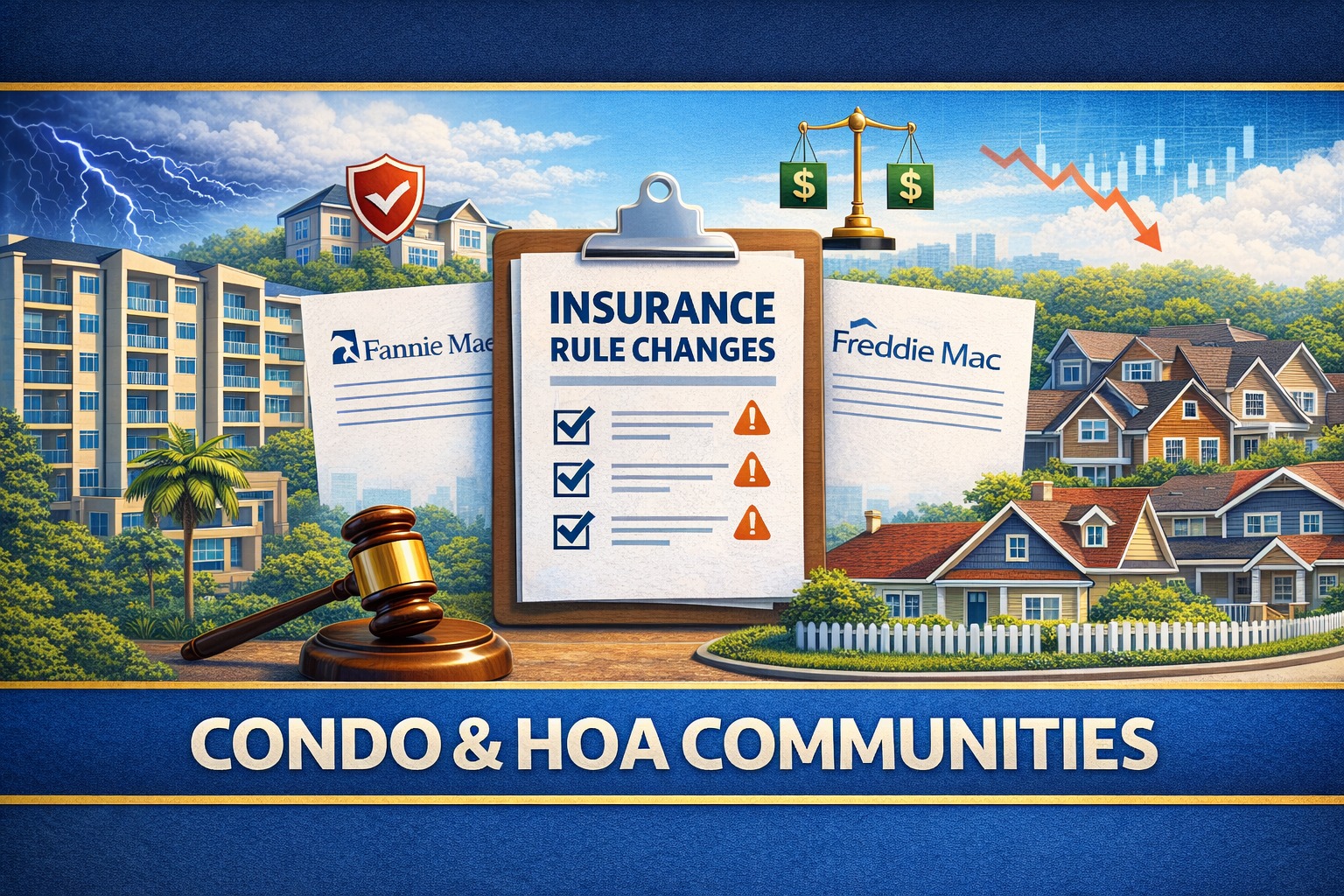
Community associations across the country—and especially here in North Carolina—have been grappling with rising insurance costs, limited coverage options, and increasing lender scrutiny. On March 18, 2026, Fannie Mae and Freddie Mac announced significant updates to their property insurance requirements that directly impact condominium associations and their residents. These changes are intended to reduce insurance costs while preserving access to mortgage financing for association‑governed communities.
Below is a practical breakdown of what changed—and why it matters for your community.
Why This Update Matters for Community Associations
For years, strict insurance requiremented tied to Fannie Mae and Freddie Mac eligibility have unintentionally pushed many community associations into "non-warrantable" Status. When that happens, buyers struggle to obtain conventional financing, sales slow, and property values can suffer.
The March 2026 update acknowledges what boards and managers have been saying for some time: insurance availability and affordability have changed, and lending standards must adapt accordingly.Below are key changes that mayimpact your community association directly:
Actual Cash Value (ACV) Roof Coverage Is Now Acceptable
One of the most impactful changes is that Fannie Mae and Freddie Mac will now accept Actual Cash Value (ACV) coverage for roofs on condominium and townhome buildings.
Previously, many associations were forced to carry full Replacement Cost Value (RCV) roof coverage—even when premiums became unaffordable or coverage was unavailable in coastal and high‑risk markets.
What this means:
- Associations may now have more affordable insurance options
- Roof coverage can reflect the roof’s actual age and condition
- The remainder of the structure must still be insured at replacement cost
Simplified Deductible Requirements for Condo Projects
Another improvement addresses confusion around deductible calculations. Fannie Mae and Freddie Mac have simplified the “maximum per‑unit deductible” requirement, which previously caused otherwise healthy associations to lose financing eligibility.
Why this matters:
- Fewer technical disqualifications during lender reviews
- Reduced administrative burden on boards and managers
- Improved consistency when lenders review association insurance policies
Removal of a Costly 2024 Insurance Clarification
The agencies also eliminated a 2024 insurance “clarification” that had inadvertently slowed insurance claims and increased administrative complexity without improving risk outcomes.
By removing this requirement, associations can expect:
- More efficient claims processing
- Less friction between insurers, boards, and lenders
- Reduced compliance confusion during sales and refinances
How This Helps Homeowners and Buyers
Because Fannie Mae and Freddie Mac back a significant portion of the U.S. mortgage market, their standards directly affect whether buyers can obtain financing in an association‑governed community.
These updates:
- Improve mortgage availability for condominium buyers
- Support resale values within HOA and condo communities
- Reduce the likelihood of communities being labeled “non‑warrantable”
In short, insurance flexibility helps protect both property values and marketability.
What Boards Should Do Next
While these changes are positive, they do not eliminate the need for careful planning. Boards should still:
- Review current insurance policies with their agent
- Ensure reserve funding remains adequate
- Confirm compliance with all remaining lender requirements
- Coordinate with management before making coverage changes
These changes will be effective January 1, 2027
At Priestley Management Company, we actively work with boards, insurance professionals, and lenders to help communities stay compliant while managing costs responsibly.
Supporting Strong, Finance‑Ready Communities
If your board has questions about how these changes affect your community, financing eligibility, or insurance planning, our team is here to help.
Priestley Management Company proudly serves homeowners associations and condominium communities throughout North Carolina, providing proactive guidance that protects both compliance and long‑term property value.